Review: Marathon: The Ultimate Training Guide

Last week I decided on when to run my first marathon (more about that later). I had gotten the book Marathon: The Ultimate Training Guide by Hal Higdon for my birthday. I have been holding on to it until I was ready to put the information into practice. That time has come.

This was a well written book. Higdon is an experienced author and his skill comes through. The book is written particularly with the first time marathoner in mind. He briefly covers the history of the marathon and why anyone would want to run one. But it is not just for the new marathoner. After I have a couple of marathons under my shoes I think it would be a great resource to read again. He talks further on how to improve your time.

There were two things that disappointed me in the book. One was how little ink was dedicated to shoes and also how he handled nutrition.

The information he did give about shoes was incomplete. The edition of the book I have was written in 1999; I hope that his shoe coverage was expanded in the 2005 edition. I don’t know if it was even possible to go into your local running store 10 years ago and have a gait analysis done like it is today. There is much more that the average runner can do in choosing the right shoes than what Higdon covered in the book.

The chapter on nutrition seemed to advise from the perspective that the readers would already be eating properly and that to train for a marathon you would need to change where you get your calories from. But there was not a basic list of good and bad foods. I realize that this is not a nutrition book, but since one chapter was dedicated to nutrition, I expected there to be more about general eating. In a nutshell, he said that it would be hard to get the volume of calories you need from your regular diet because it would mean so much greater volume of food. Of course he has to be talking about someone who already gets the bulk of their calories from non-processed foods. I think it would be more accurate to assume people are eating junk and they should be taught what is proper and what to avoid. It could also have to do with the fact that he grew up in a different generation and has always been an athlete.

His chapter on post race recovery, without being overly long, went into detail as to what you should be doing immediately after the marathon and just about every hour following that until the next day. He then gives you guidelines to follow for several days after your race.

His training plans are worth the price of the book. The plan itself is reproduced all over the Internet. But what makes the book special is that he does not just say “Run 3 miles today.” Rather he tells you that on Thursday of week 4 (4 weeks before the marathon): “Five miles for novices. You are entitled to feel a bit tired today. It’s normal. That’s what training is all about. A 40-minute tempo run for experts. Although the mileage buildup continues, we’ve already begun to cut back on your tempo runs. Don’t overdo today’s workout. Save something for a very tough weekend.” That is his coaching coming through. It is not just a bunch of numbers on a chart for Higdon. Those numbers represent something and he knows what you need to hear each day of the 18 week plan.

I am curious to see the newer edition just to see if he spent more time on shoes and changed his focus with nutrition. Other than those two things I thought it was an excellent preparation book. I am glad I had a chance to read it several weeks before I need to start training for my fall marathon.

Marathon: The Ultimate Training Guide, Hal Higdon, 1999, Rodale Press, 121 pages.

March Goals Report

Running 1000 miles for the year
I ran 18 days out of the month, which means I did not run 13. Only one time did I take 3 days in a row off. I was able to stick to my plan to not run more than 3 days in a row.

I ran a total of 85.1 miles for the month.

For the year I am at 248.5 miles and have run 52 out of 91 days this year. That puts me 1.5 miles behind where I need to be for the year. That will be pretty easy to make up.

Reading 800 pages a month
I read 855 pages this month. Not too much over the goal, but I did make it this month.

I read from 6 books. Besides the Bible I read Talking with Catholic Friends and Family, The Trumpet of the Swan, Passages: Darien’s Rise. I started The Art of Deception and read some more on D Day.

April should be pretty easy to stay on track. I will be home the whole month so it will just be a matter of staying consistent.

February Goals Report

Running
I ran 15 days out of the month. I did not run 14. There were 2 times that I missed running 3 days in a row. The rest of the time I only had 1 day breaks between running.

I ran a total of 72.2 miles for the month. I ended the month right on track for a 1000 mile year. At the end of January I was 6.5 miles ahead of schedule. Traveling and a very tightly scheduled conference ate up the 6.5 mile buffer, but that was why I worked to get ahead.

Reading
I fell way behind on my reading. I only read 657 pages (goal is 800 per month). Most of the reading I did was in the last week and a half of the month. No real excuse other than I was busy and did not make it a priority until late in the month.

I read Do You Mind if Your Kids Don’t and Cure for the Common Life and I completed When Charity Destroys Dignity. I also read on the book D Day, but not very much. I need to finish it within the next 2 weeks so that I can give it back to the owner when I see him. I also read a master’s thesis entitled Seducing Spirits.

The month of March will be another tough month, but without the goals I think it would be easy to cruise through the month and not accomplish much in the area of reading and running.

Review: Do You Mind if Your Kids Don’t?

Do You Mind coverDo You Mind if Your Kids Don’t? is written by Evangelist Bill Rice III. I worked with Dr. Bill for many years and learned a lot from his daily teaching for my spiritual life and family ministry.

In this book, Dr. Bill talks mostly about the relationship between parents and children, but it really is more than that. He gives you great biblical principles on family relationships and how to train your children to be disciplined and respectful. He also explains very clearly how one can be saved and know it as well as how to find God’s will for one’s life. Much of what he gives are the same principles he teaches to teenagers every week at the Bill Rice Ranch (named for his father).

One of the biggest emphasis he has in the book is about the relationship between parents. The Bible has very clear teaching that parents should be united in their relationship, especially with their children. This does not mean that parents always agree or that they never have to work through differences of opinion, but as far as children are concerned they need to see a united leadership in their mom and dad.

Because I know Dr. Bill’s children very well, this book means much more to me. I know that the things he teaches have been borne out in the lives of his three children who are now grown and serving the Lord in different ministries.

I would recommend this book to any teenager and young adult. It is best to start building your philosophy about family before you are married. This is also a good book for anyone in ministry. You will learn how to clearly communicate the message of salvation.

Do You Mind if Your Kids Don’t?, Bill Rice III, Bill Rice Ranch Publications, 2007, 205 pages.

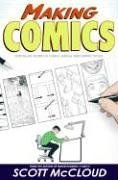
Review: Making Comics

We bought Making Comics for our son upon recommendation from The Geek Dads. It was a Christmas gift for him.

The book is written by Scott McCloud. I was previously unaware of him. Apparently he has been a long time guru in the comics industry. He has two other books out, Understanding Comics and Reinventing Comics. Those two seem to have been big successes. If they are anything like Making Comics, I understand why.

I am not an expert on comics theory or philosophy, but I will say that McCloud is a genius. His ability to explain the philosophy of comics in such a basic way is incredible. This is not a book about how to draw, but it is a book about drawing comics. He also deals with lettering philosophy and finding your own genre and niche.

He boils down for the reader what makes a comic readable and why things are done in the way they are. He points out some sacred cows–one of which he calls “flow”–but then also tells you how to go against the norm to find your own style in other aspects.

He gives many examples and is very encouraging for the new comics artist/writer. He shows that there are many styles out there that have been successful, but then he also points out why they are successful. It is not just one style of art that will make a comic be accepted. Nor is it one type of story. There are many factors involved and he tries to point those out. But, he also admits that there is no magic formula. Some of it is just trial and error.

I was disappointed by one thing in the book. There are some language and pictures that just are not appropriate for a 10 year old. I am disgusted with myself for assuming the book was written for all ages. It is not. I took Geek Dad’s recommendation with the thinking that it would be good for children since that is the tone of their blog and podcast. I did not have a Sharpie(tm) handy when I read the book the first time. I guess that means I have to read it again with Sharpie or white out in hand.

I understood the book as a whole. But I am not sure I completely got my head around Chapter 6 Section 3: Understanding Comics Culture. Maybe the second time through it will make more sense to me.

I really did buy this book for my son. He has read it twice or three times in the two weeks we have had it. But it was a good read for me as well. I have no interest in becoming a comics artist, but I am a communicator. I love reading books on communication and particularly philosophy of communication. This book was right up my alley. The subtitle is: Storytelling secrets of comics, manga, and graphic novels. It really is all about how to communicate a story from one person to another.

Absolutely highly recommended. If you have younger children, maybe below the age of 14, then you may want to read through the book first to make sure it is acceptable. If not, there are only a few places where the pen of censorship needs to be applied.

Making Comics: Storytelling Secrets of Comics, Manga and Graphic Novels, Scott McCloud, Harper, 2006, 264 pages.